Real change takes courage—and sometimes a little help.

Bill works with people experiencing addiction and other life-challenging situations who are seeking a path of recovery, growth, and flourishing in all areas of life.
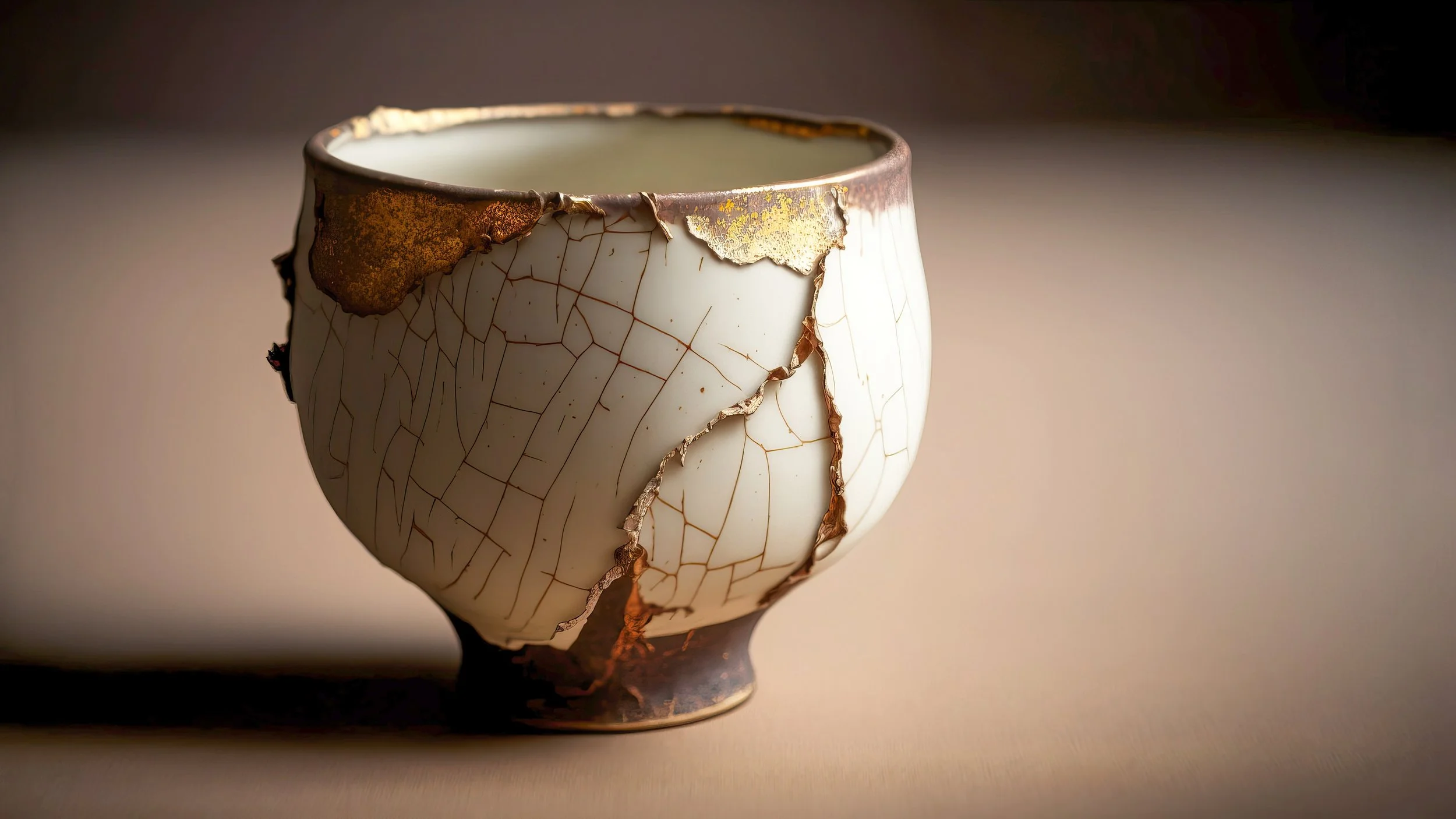
Kintsugi is the Japanese art form of mending broken pottery with precious metals thereby making the repaired item even more valuable for having been redeemed. Kintsugi is a wonderful way of talking about redemption and recovery and it has increasingly become a metaphor of the process of moving beyond addiction.
My story begins with addiction, mental illness, trauma, and abuse and years living out of my childhood terrors. Through a series of events which culminated in my arrest my addiction met God’s redemption. In some ways I lost everything and in others I gained more than I lost. I am kintsugi, broken parts being mended with love, patience, forgiveness, and grace, a process that continues.
Since that turning point, I have learned that redemption and renewal is never a solitary journey. Just as my life was pieced back together by the love of God and the care of others, research confirms what experience has already taught me: we are most likely to heal and grow when we walk with someone who can guide us and help in our training.
A broken pot cannot mend itself. It takes a grace-filled community who know that difficult path you are on. Experience shows and research confirms that people who engage with mentors, coaches, or sponsors are nearly twice as likely to maintain long-term recovery compared to those who try to walk the journey alone. We were created for connection, and healing always comes in the context of relationship with God, self, and others. For me, the presence of God and others was not optional, it was essential and discipleship helped.
I also discovered that change requires wisdom, rhythm, and practice. Just as the craft of Kintsugi takes patience and intention, so recovery takes small, intentional, and consistent steps. Studies published by the American Psychological Association highlight that people who build regular practices of reflection and guided conversation see a 40–60% improvement in long-term resilience and well-being. My mentors helped me put one foot in front of the other, encouraged me when I stumbled, and celebrated when I took even the smallest step forward.
I am here because others chose to walk with me when I could not walk on my own. If you are ready to begin or continue your own process of healing and redemption, I would be honored to walk beside you.
Book a Consultation
One conversation could change everything.